Classroom Harmony
Structure that supports teachers. Safety that reaches students.
Classroom Harmony is anchored in the Good Behavior Game (GBG) — a globally researched classroom management strategy for strengthening emotional self-regulation and reducing disruptive behaviour. It works because it fits into real school conditions: overcrowded rooms, busy schedules, limited time.
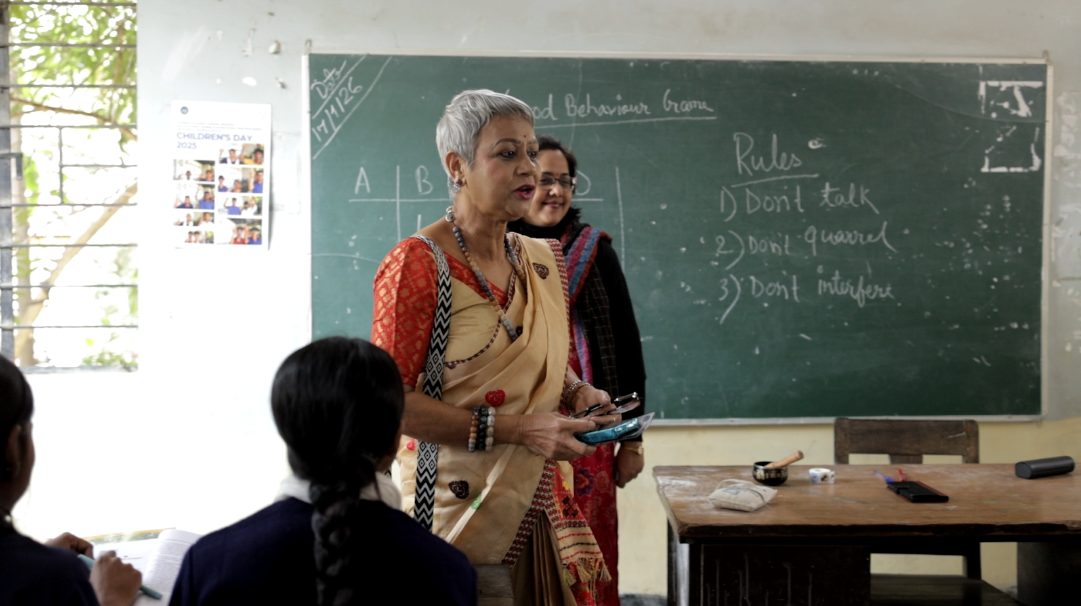
October 2024.Natun Fatasil.
Classroom Harmony began quietly in October 2024 at Natun Fatasil Town High School in Guwahati. There was no grand launch. We simply began working with teachers and students to introduce better daily structure inside classrooms.
Shared norms. Short grounding moments. Team-based accountability. Clear language around responsibility.
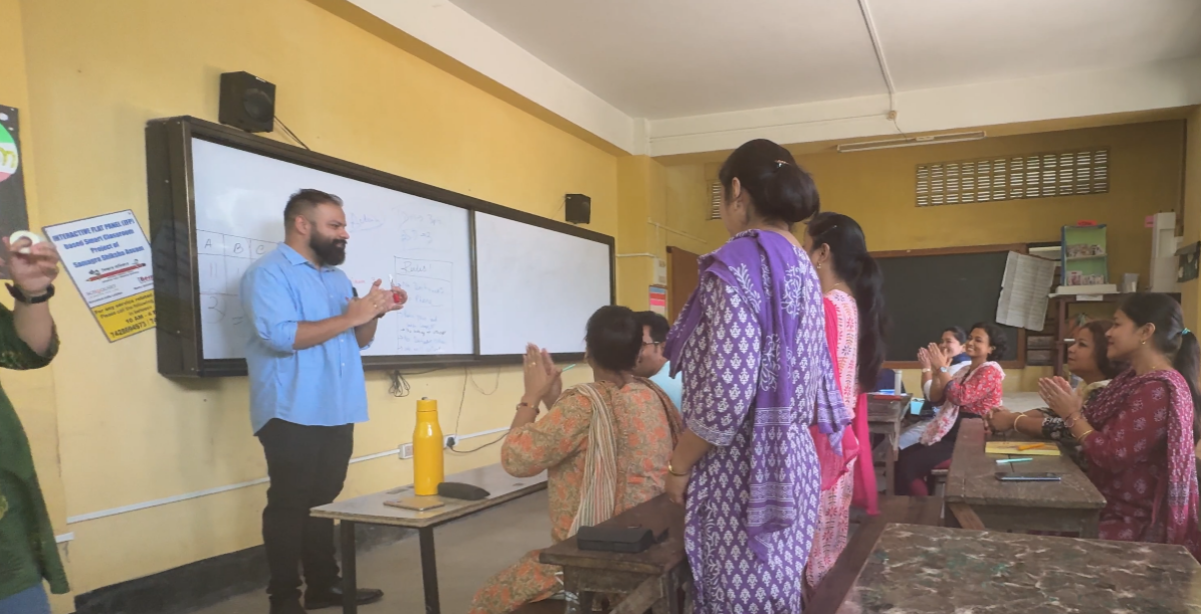
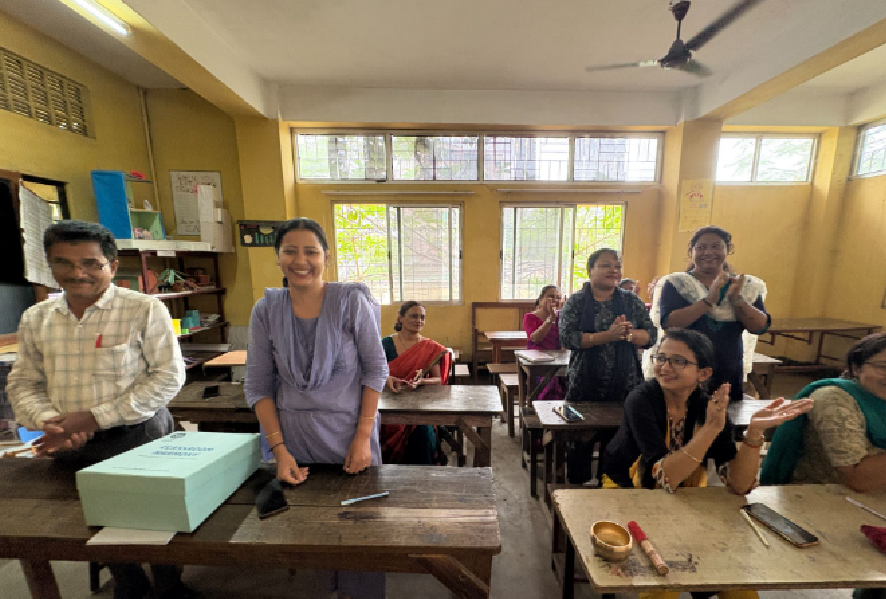
The Good Behavior Game How It Works
The GBG is one of the most rigorously studied school-based behavioural interventions globally — with evidence spanning classroom outcomes, long-term behaviour regulation, and reduced risk behaviours into adolescence. Our innovation is guided by research from the Centre for Public Mental Health (CPMH).
Children internalise self-regulation through shared team accountability — not individual punishment.
Students develop the pause — the space between impulse and action — as a daily habit embedded in structure.
Regulation is motivated by care for others — not fear of consequences. This shifts the entire classroom dynamic.
How Classroom Harmony runs every day
Grounding Routines
Short, predictable opening and closing rituals that signal the start and end of learning time — reducing transition chaos and helping students arrive mentally present.
Good Behavior Game
Teams earn points for positive behaviour during designated GBG periods. Simple, visual, and embedded into normal lesson time — no extra class needed.
Shared Class Norms
Three simple classroom rules — co-created with students — posted visibly and referenced consistently. Expectations are shared, not just imposed.
Positive Recognition
Consistent, specific acknowledgement of positive behaviour — shifting the classroom from correction-heavy to recognition-rich.
Teacher Handbook
A practical, low-burden guide for daily GBG implementation — structured enough to follow, flexible enough to adapt to each classroom's rhythm.
Mindfulness Handbook
Simple, evidence-based calming practices for teachers to use before and after high-stress transitions — helping students refocus without disruption.
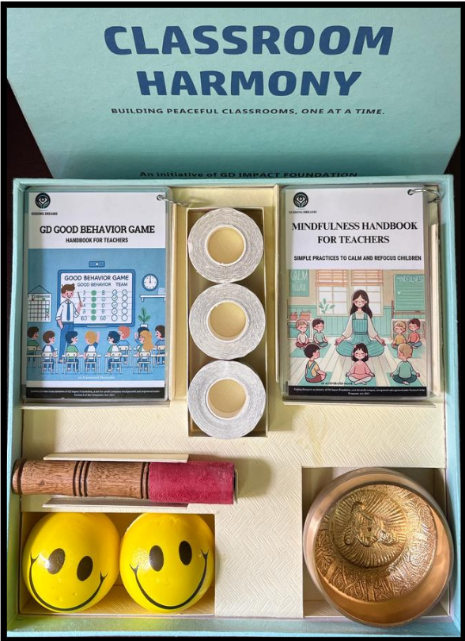
Each participating school receives a structured toolkit — GBG Handbook, Mindfulness Handbook, timer bell, and materials — everything needed to begin without additional procurement.
The teachers who
hold the rhythm.
For 1.5 years, Classroom Harmony has continued inside the school day — shaping how teachers manage transitions, how students work in teams, and how behaviour is addressed.

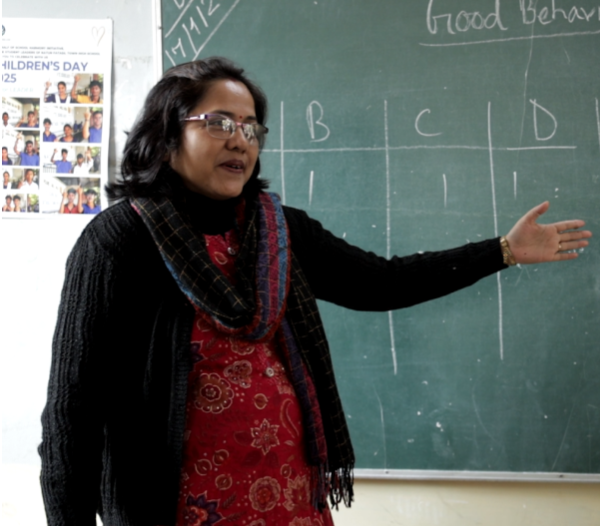



When responsibility is shared, classrooms feel lighter.
When structure supports teachers, their energy shifts.
If you want to understand it
properly — see it.
The Classroom Harmony documentary takes you inside the school — into real classrooms, real routines, real conversations. No scripts. No staged moments.
If you are a school leader looking for calmer classrooms, this is a place to begin.
Watch the Classroom Harmony Film